
These cheap apartment decor tricks can make a rented apartment feel more finished without spending much. An apartment can have a nice sofa and still feel unfinished. The curtains stop too high, the pillows look flat, and a tangle of cords sits beside the TV. Small details like these can make a room feel less pulled together, even when the furniture itself works.
The good news is that cheap apartment decor that looks expensive often starts with adjusting what you already own. A better curtain length, a textured pillow cover, or a lamp moved to the right spot can give an ordinary corner a more thoughtful finish. None of those changes needs a bigger room.
The ideas below focus on useful upgrades for tight living rooms, small bedrooms, and the everyday spaces in between. Start with the detail that bothers you most, then work with your existing furniture and colors. There is no need to buy everything on the list. And if you rent, check what changes your lease allows before drilling, painting, or replacing fittings. A few well-chosen fixes can be enough.
Cheap Apartment Decor Tricks: 1. Hang Plain Curtains Higher and Hem Them to Fit
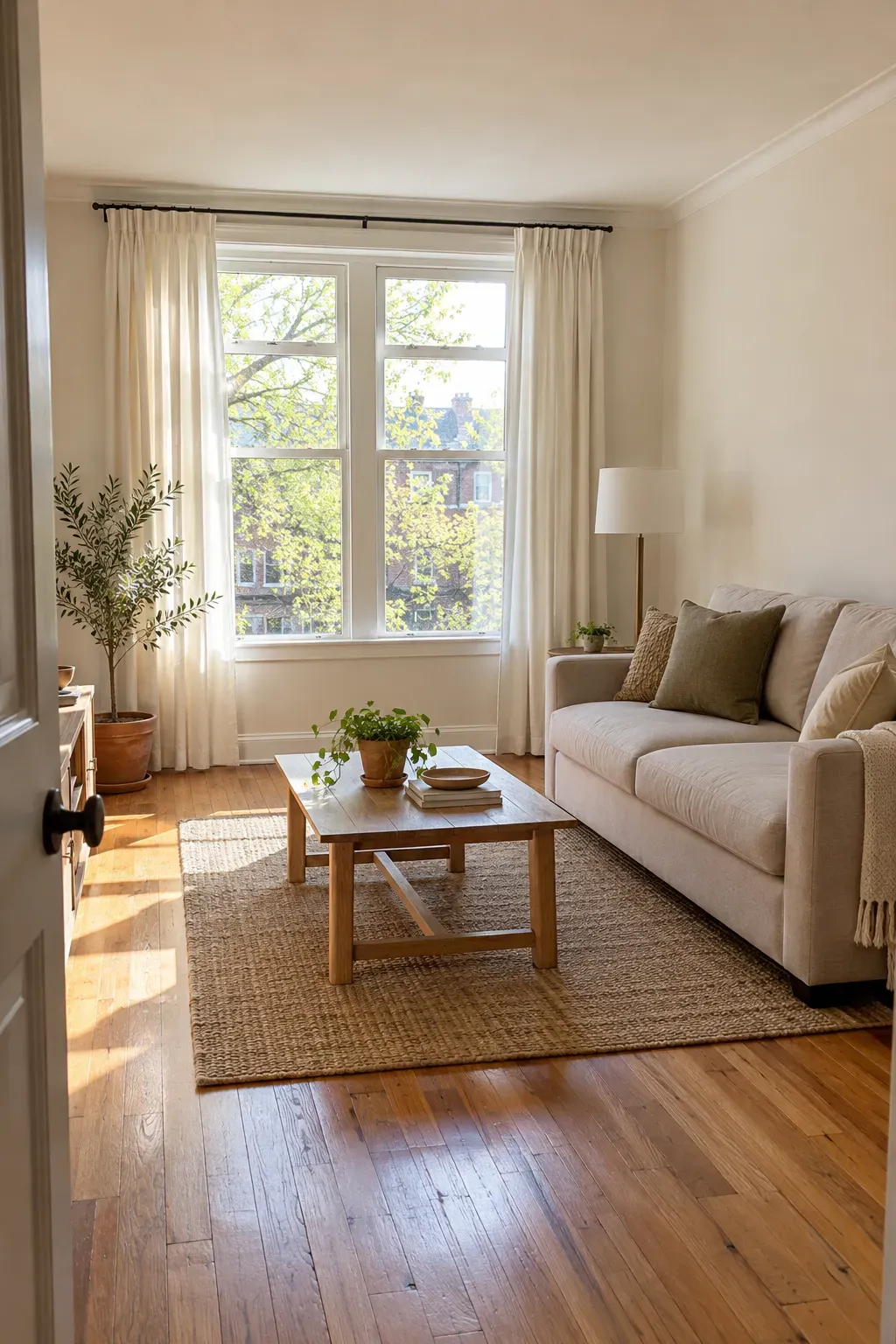
Short curtains can make a window look like it is wearing trousers that shrank in the wash. Plain panels often look more polished when their length suits the room.
Where mounting is allowed, position the rod above the window frame with enough room for the brackets. Let the panels sit beside the glass when open so they do not block useful daylight.
Fit before you finish: Wash washable panels according to their care label, hang them, then mark the hem. Aim for fabric that barely clears the floor. In a small apartment, that keeps the walkway free of pooled fabric.
BEFORE
Panels cover part of the glass even when open, and the hems stop at different heights.
AFTER
The window opens fully, the fabric hangs evenly, and nearby heating vents stay clear.
2. Swap Shiny Pillow Covers for Textured Fabric
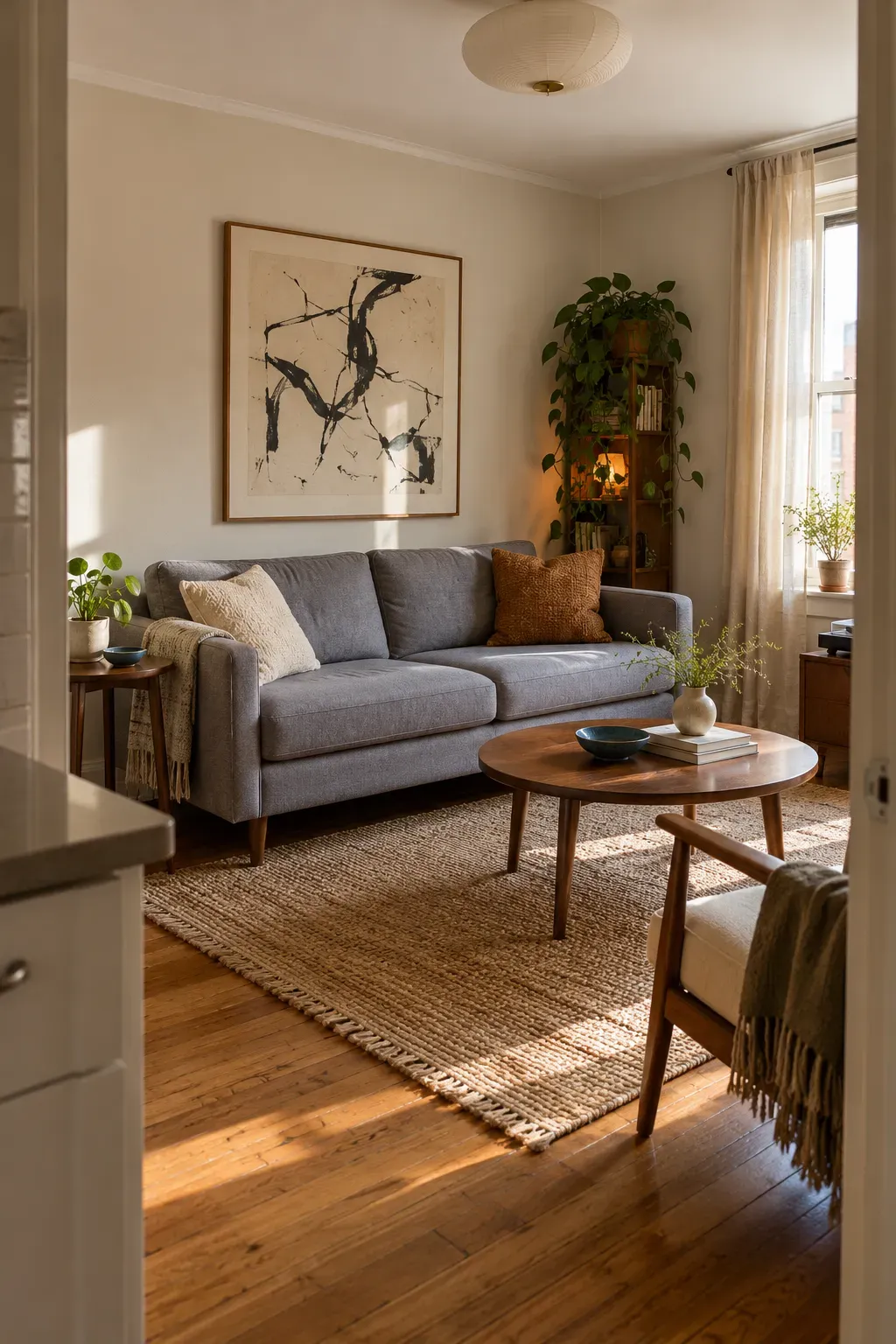
A little texture can make a basic sofa feel more finished without adding another piece of furniture. Keep the pillow inserts you have and look for covers in cotton, linen blends, or a soft woven fabric.
Choose colors that connect with the sofa, rug, or curtains. Cream and warm brown are an easy starting point, but a faded green or muted blue can work just as well.
Before buying: Measure each insert and check the cover size. A loose cover can sag at the corners. Leave enough clear seat space to sit down without moving a pile of pillows.
| Fabric | Check before choosing |
|---|---|
| Cotton canvas | Feel for softness where your arm or cheek will rest. |
| Linen blend | Expect a relaxed finish with some visible creases. |
| Looped weave | Check for loose loops that could catch on claws or jewelry. |
3. Frame a Large Fabric Remnant as Statement Art
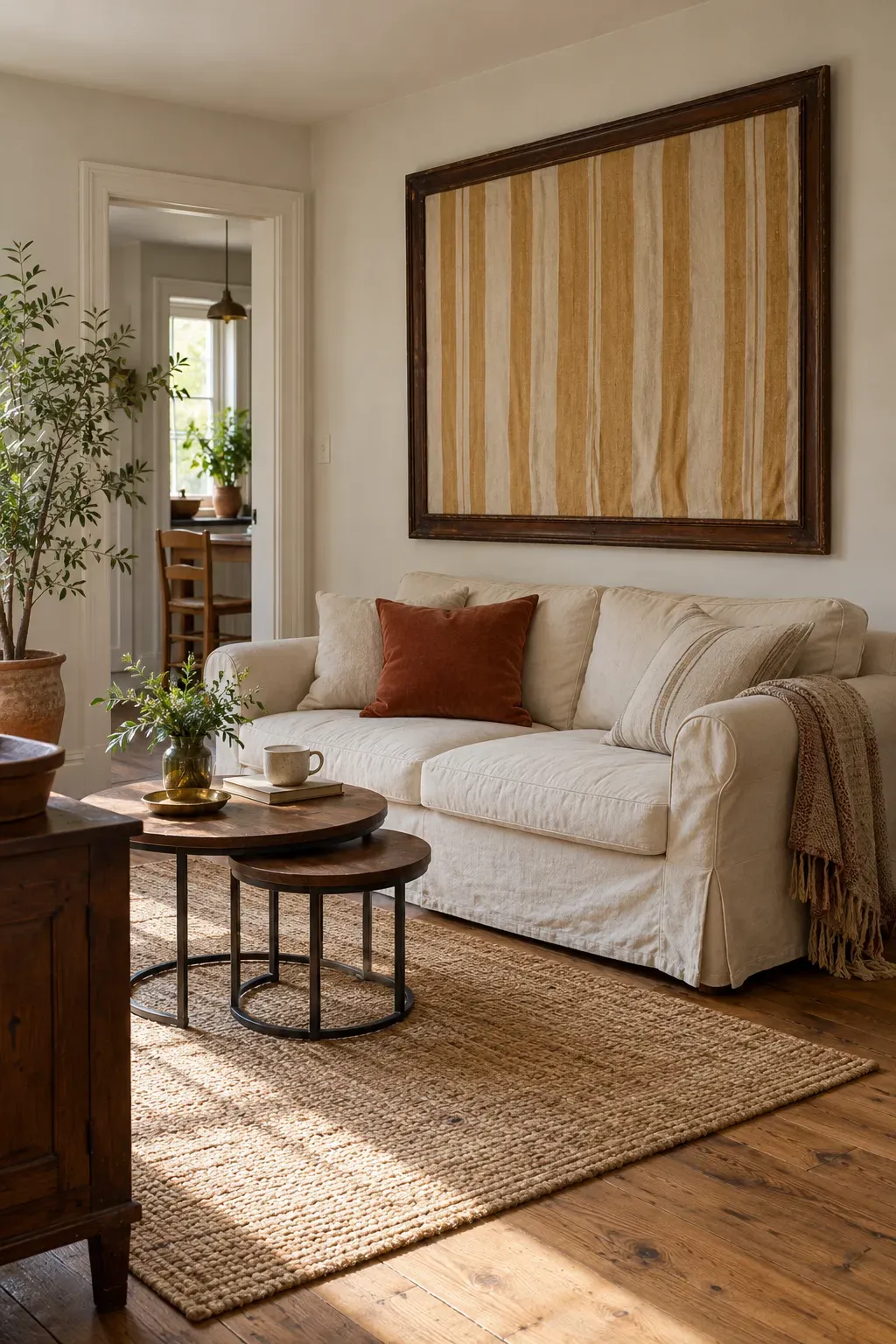
Fit a fabric remnant inside a secondhand frame to give a blank wall a clear focal point. A simple stripe, loose floral print, or woven pattern can look thoughtful without the price of a large art print.
Choose the frame first, then find fabric that covers its backing with room to fold around the edges. Press the fabric and secure it neatly to a clean backing board.
Keep the scale believable: Test the frame’s size with paper on the wall before hanging it. Above a small loveseat, leave visible wall around the frame so the piece does not crowd the furniture.
🖼️ Check the frame
Look for sound corners and secure backing before you buy.
🧵 Check the fabric
Hold it against the backing to see whether marks show through.
🔨 Check the hanging method
Use hardware suited to the wall and the finished frame’s weight.
4. Hide Visible Cords Along the Furniture You Already Have
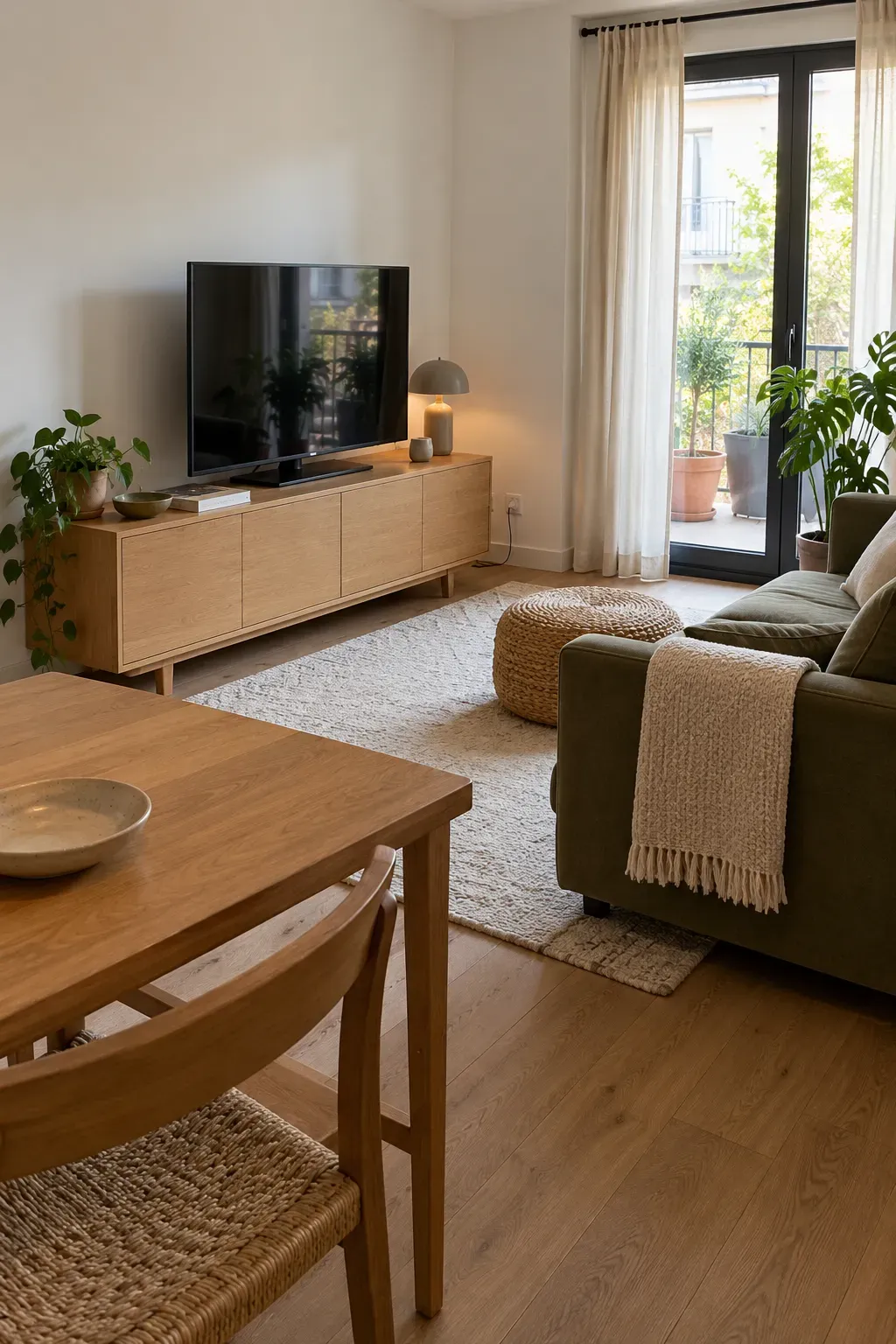
The TV corner can look busy even after you clear the surface. Often, the loose cords underneath are what keep catching your eye.
Follow each cord from its device to the outlet, then guide it along the back of the existing media cabinet with suitable clips. Keep adapters accessible and leave ventilation openings clear. Gather loose length with reusable ties instead of pulling cables tight.
Start at the furniture: This often avoids sticking anything to a painted wall. If a visible wall section needs a cord cover, check the product’s surface guidance first. Adhesive products can lift paint when removed.
Before you tuck everything away
- Check that the cabinet can move slightly without tugging a plug.
- Keep cords out of door hinges, drawers, and foot traffic.
- Leave plugs reachable for cleaning or unplugging.
- Keep power cords out from under rugs.
5. Use Small Lamps to Light Different Parts of the Room
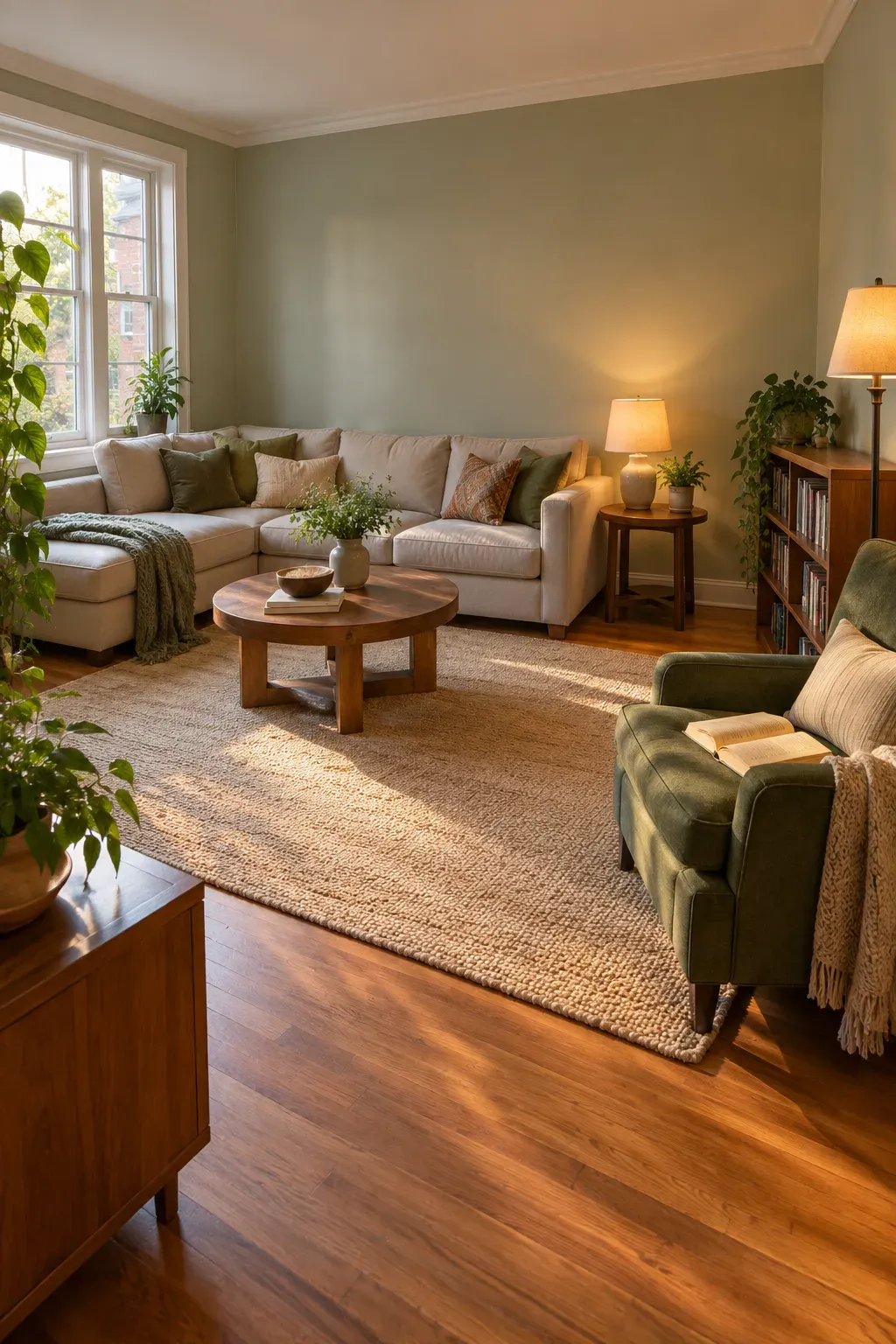
A reading corner and a sofa do not need to share the same harsh ceiling light. Small lamps on surfaces you already use can give each part of the room a softer glow.
Move an existing lamp beside the seat where you read. A second compact lamp can sit on a bookcase shelf with enough clearance, following the lamp maker’s guidance. Choose bulbs with a similar warm tone so the light feels consistent.
Check before spending: A dusty shade or a bulb that shines straight into your eyes may be the real problem. Clean the shade and test a new position first.
Beside the sofa
Sit down to check that the shade hides the bright bulb from your eyes.
Near your book
Aim useful light toward the page without putting the lamp in the walkway.
Beside the TV
Check the screen for glare from your usual seat before settling on a spot.
6. Reposition Your Rug to Connect the Seating Area
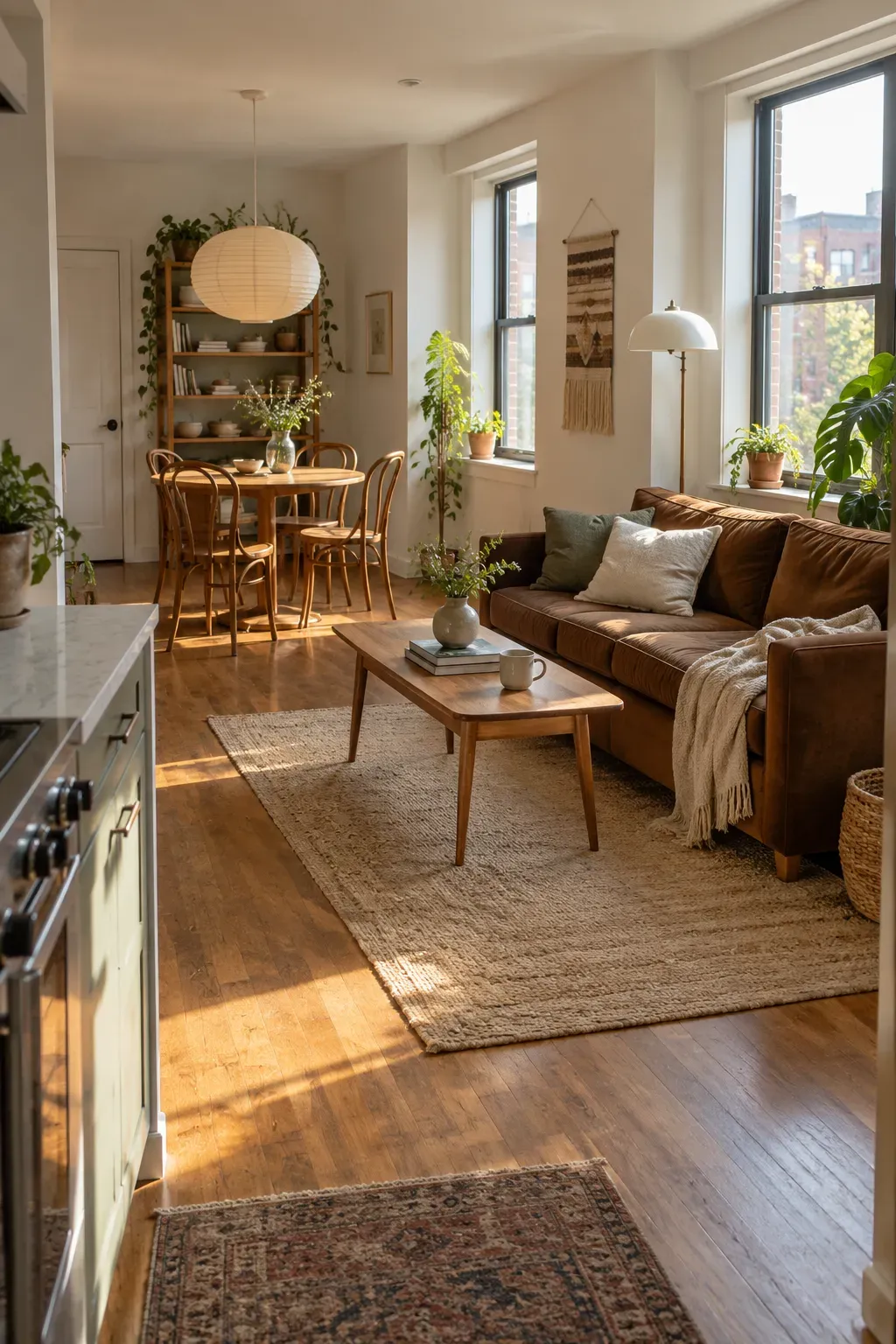
A rug floating between the sofa and coffee table can make a small room feel like separate pieces pushed together. Before replacing it, test a different position.
Slide the rug toward the sofa so the front feet rest on it, if its size allows. Center it on the seating group rather than the whole room. In an apartment where the living area shares space with a dining table, this helps define where the sitting area begins.
Work with what fits: Keep the rug flat, check that doors open freely, and leave the main walking route clear of curled edges.
💡 If your rug is too small
Test it beside the bed or under a reading chair instead. A small rug can look more intentional in a smaller zone. Take a doorway photo of each arrangement before deciding.
7. Give a Worn Sofa a Neatly Tucked Throw
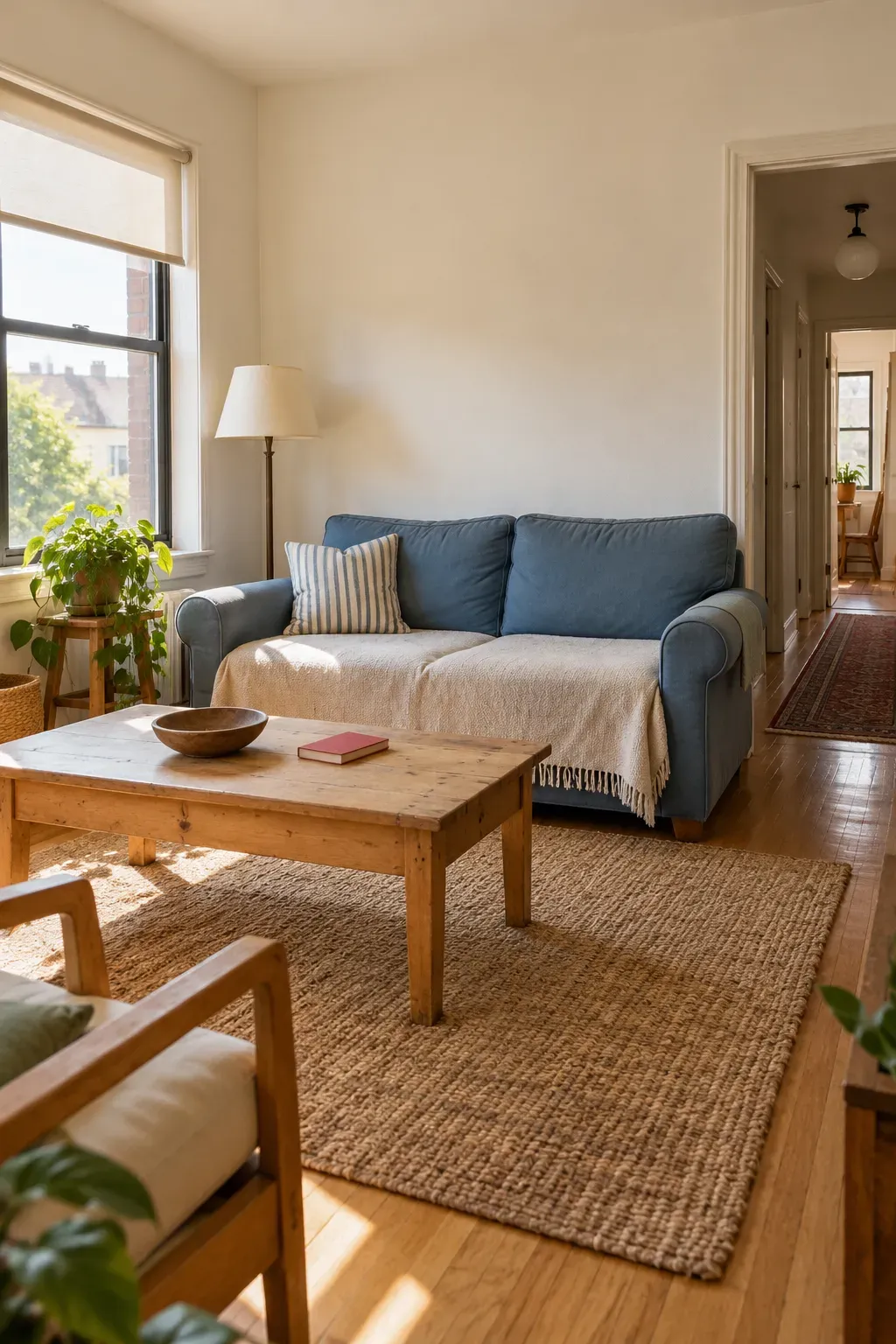
The middle cushion often shows wear before the rest of the sofa. A throw you already own can soften that patch without covering every inch of the furniture.
Choose a washable throw large enough for the seat area you want to cover. Smooth it across the cushions, tuck a little fabric into the gaps, and keep the front edge even. Let the sofa arms remain visible so the piece still has a clear shape.
Give it a sitting test: Sit down, stand up, and check how far the fabric moves. A throw that needs constant fixing will become another chore.
✅ Do this
Choose fabric with enough grip to stay on the upholstery.
Keep fringe and loose corners above the floor.
Skip this
Stretching a small throw so tightly that it pulls out when you sit.
Covering recliner controls or moving parts with loose fabric.
8. Replace Basic Cabinet Pulls With a Matching Set
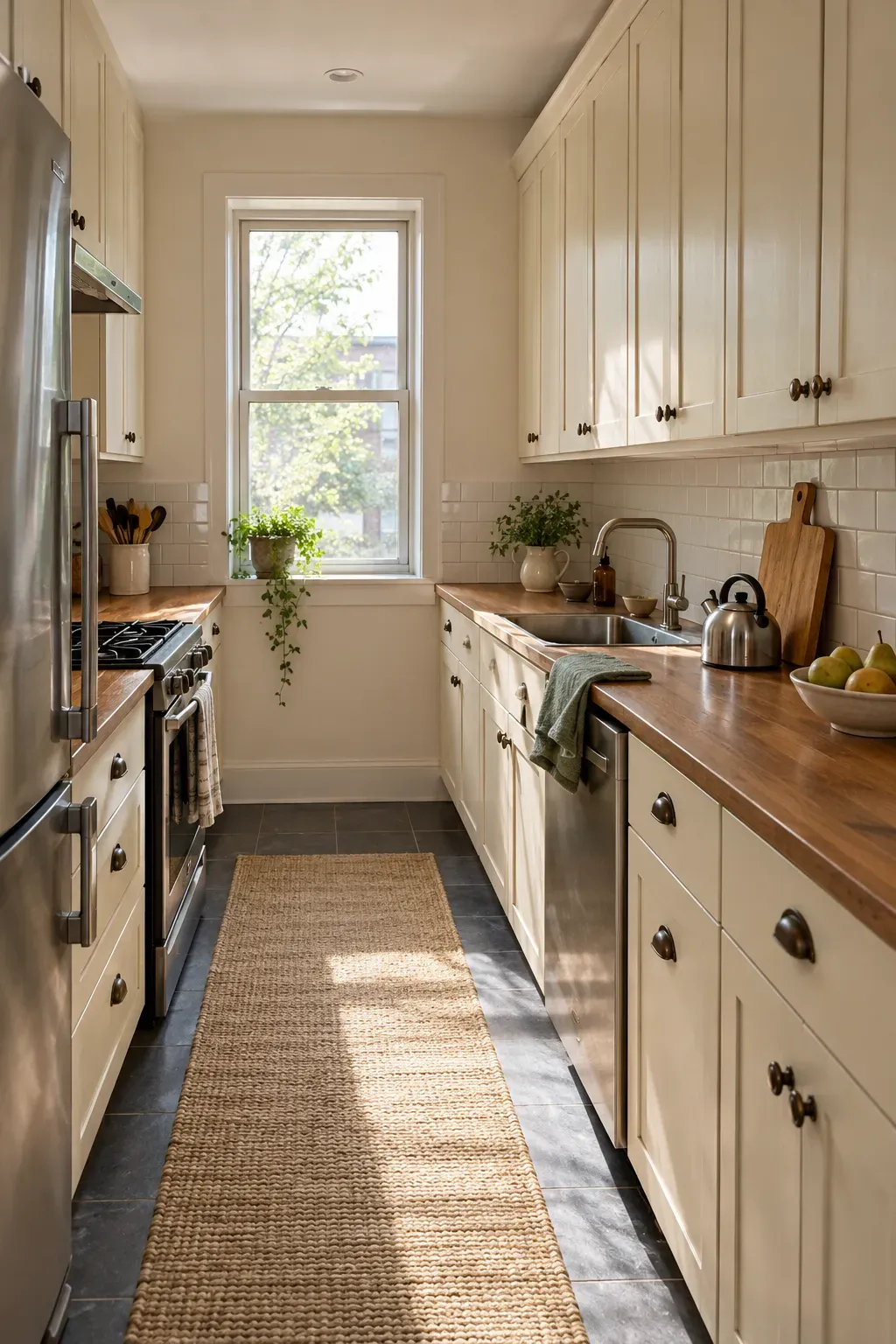
Matching cabinet pulls can make a small kitchen feel more finished, especially when the current handles are loose or mismatched. Start by tightening and cleaning what is there. You may not need replacements at all.
If you do swap them, choose a simple shape and one finish for the whole run of cabinets. Measure between the centers of the existing screw holes before shopping.
For a rental: Get permission for the change and avoid drilling new holes. Keep the original pulls and screws together in a labeled bag so you can put them back when needed.
Check one handle before buying the set
- Match the distance between screw holes, not just the handle’s total length.
- Check that the supplied screws fit your door thickness.
- Make sure your fingers fit comfortably behind the grip.
- Open nearby doors and drawers to check for collisions.
9. Make Your Bed With Fewer, Fuller-Looking Layers
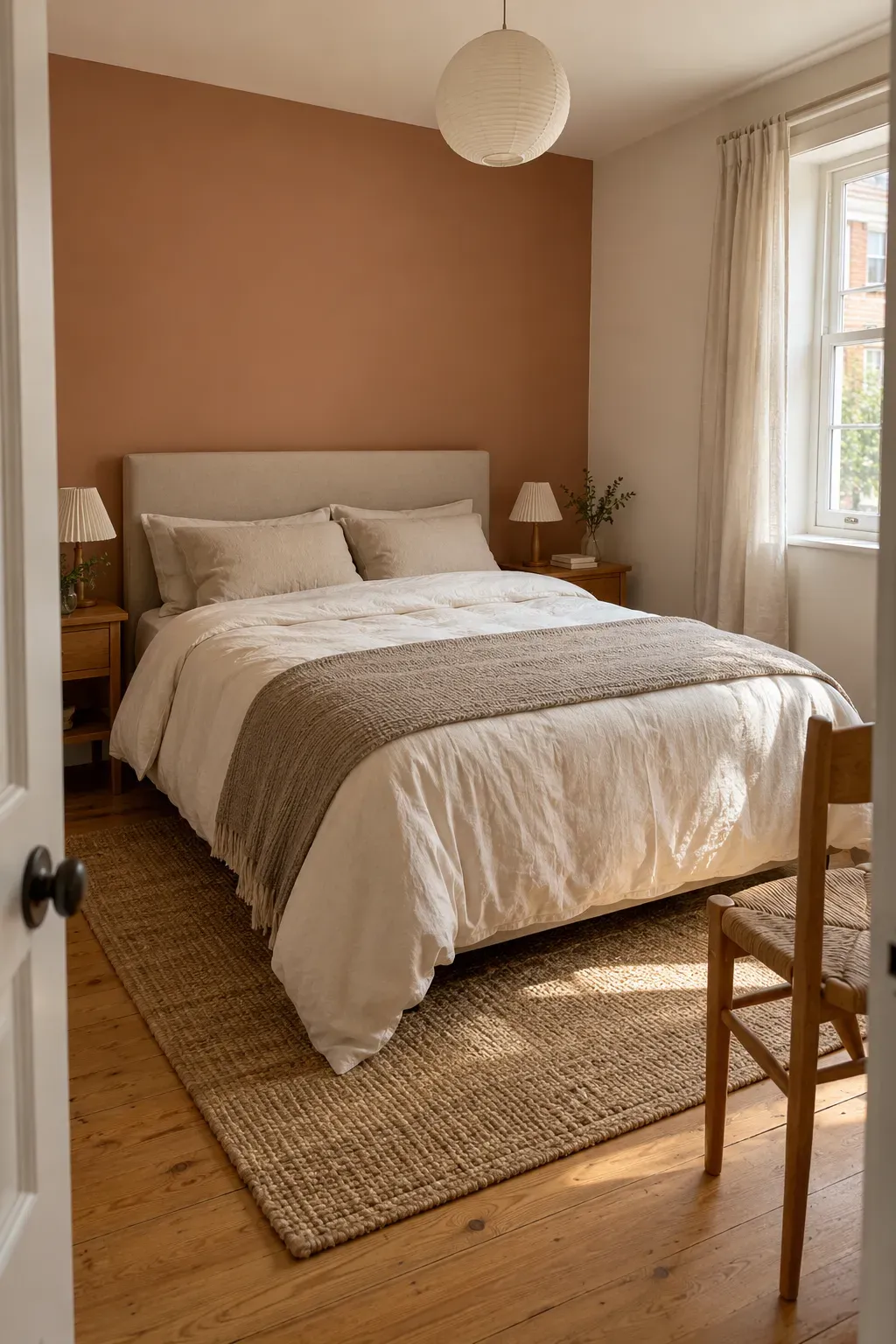
A bed can look inviting without a row of decorative pillows taking over the room. The useful starting point is bedding that fits and sits evenly.
Shake out the duvet, spread the filling toward the corners, and straighten the cover. Fold back the top edge so the sleeping pillows have a little space around them. If you own a lightweight blanket, fold it across the foot for a change in texture.
Skip the nightly pile: Keep only the pillows you use or have room to store. In a small bedroom, a clear chair is more useful than another cushion.
The base
Smooth the fitted sheet and check that its corners stay tucked.
The main cover
Center the duvet so the visible sides hang evenly.
The finishing layer
Use a blanket you can reach for on a cool night. Leave it off if it feels bulky.
10. Repeat One Accent Color Across Pieces You Own
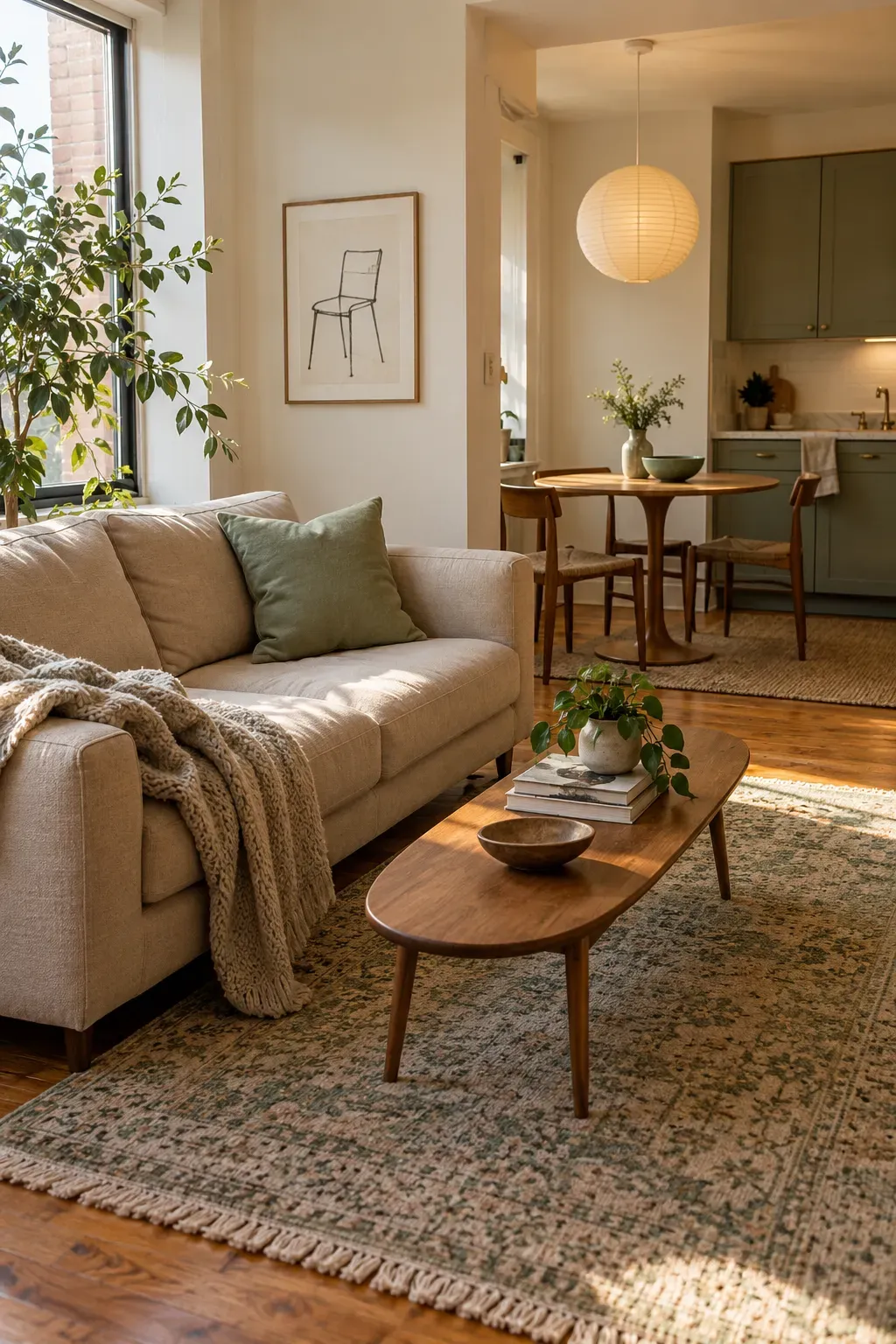
Choose a color you already like in the room, then look for a few existing pieces that echo it. The faded green in a rug might connect with a cushion cover and a ceramic bowl.
Spread those touches around the space instead of putting them together on one shelf. The shades do not need to match exactly. A little variation usually feels more relaxed than a matching set.
Shop your apartment first: Check other rooms, cupboards, and stored textiles before buying anything. Moving a bowl or swapping two cushion covers may be all the color connection needs.
Find your starting point. Pick a color from something staying in the room, such as a rug or favorite print.
Test the pieces together. Check them in daylight. A yellowish green and a blue-green may feel quite different.
Check from the doorway. Remove a piece if the color feels crowded in one corner.
11. Place a Secondhand Mirror Where It Reflects Light
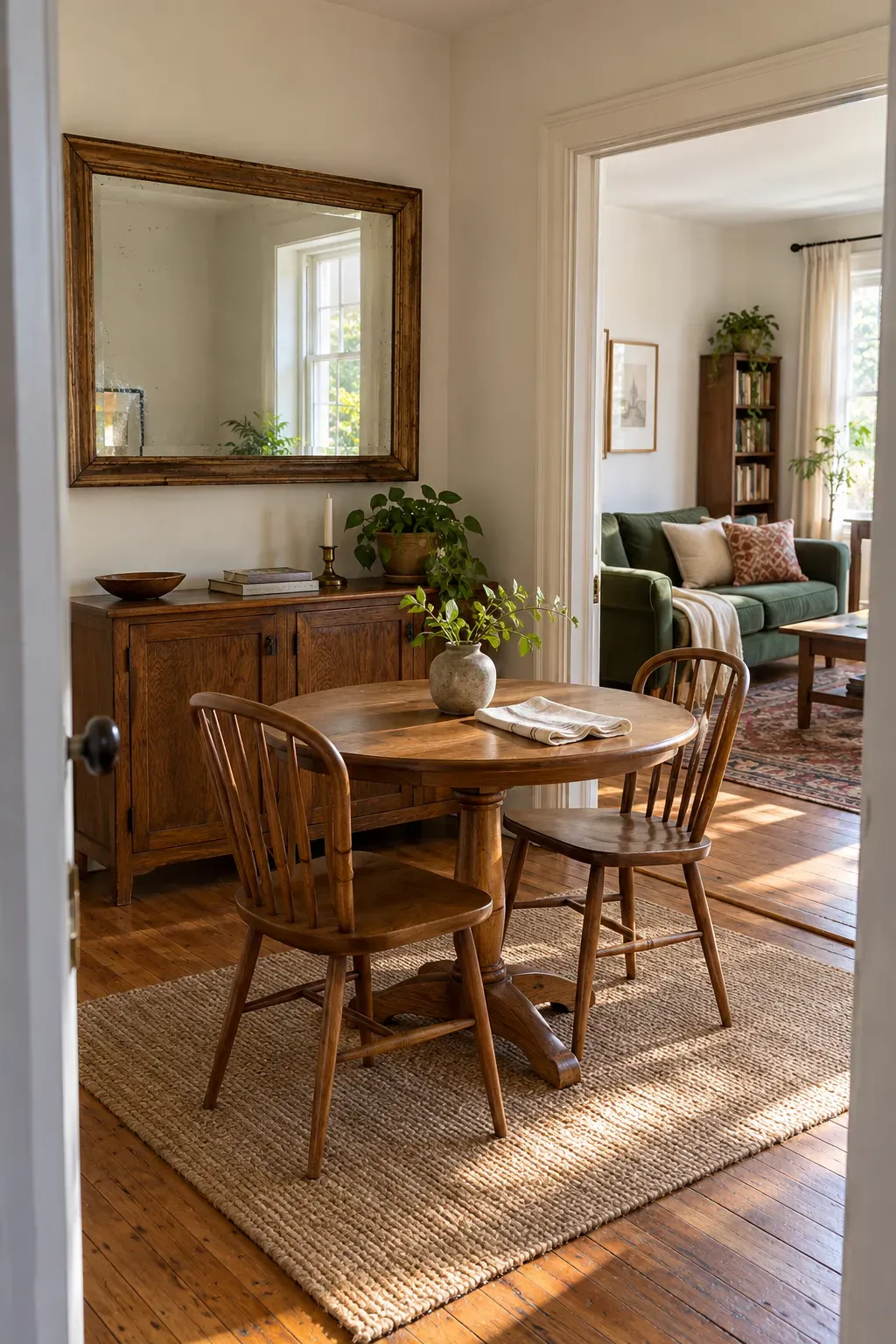
A mirror is only as useful as the view inside it. Facing a bright window or a calm part of the room can make it feel like a thoughtful addition. Facing the laundry pile gives you another view of the laundry pile.
Before hanging a secondhand mirror, test the reflection from your usual seat and the doorway. A spot beside a window may work better than directly opposite it, especially if sunlight creates glare.
Check the whole piece: Look for damaged edges, loose backing, and secure hanging points. Use fixings suited to the mirror’s weight and your wall type.
A useful reflection
A bright window, a simple wall, or a corner you enjoy looking at.
Check the view while seated as well as standing.
A reason to move it
The reflection highlights a crowded shelf or an open utility area.
Bright glare reaches your eyes or the television screen.
12. Give Everyday Clutter a Home Inside Existing Storage
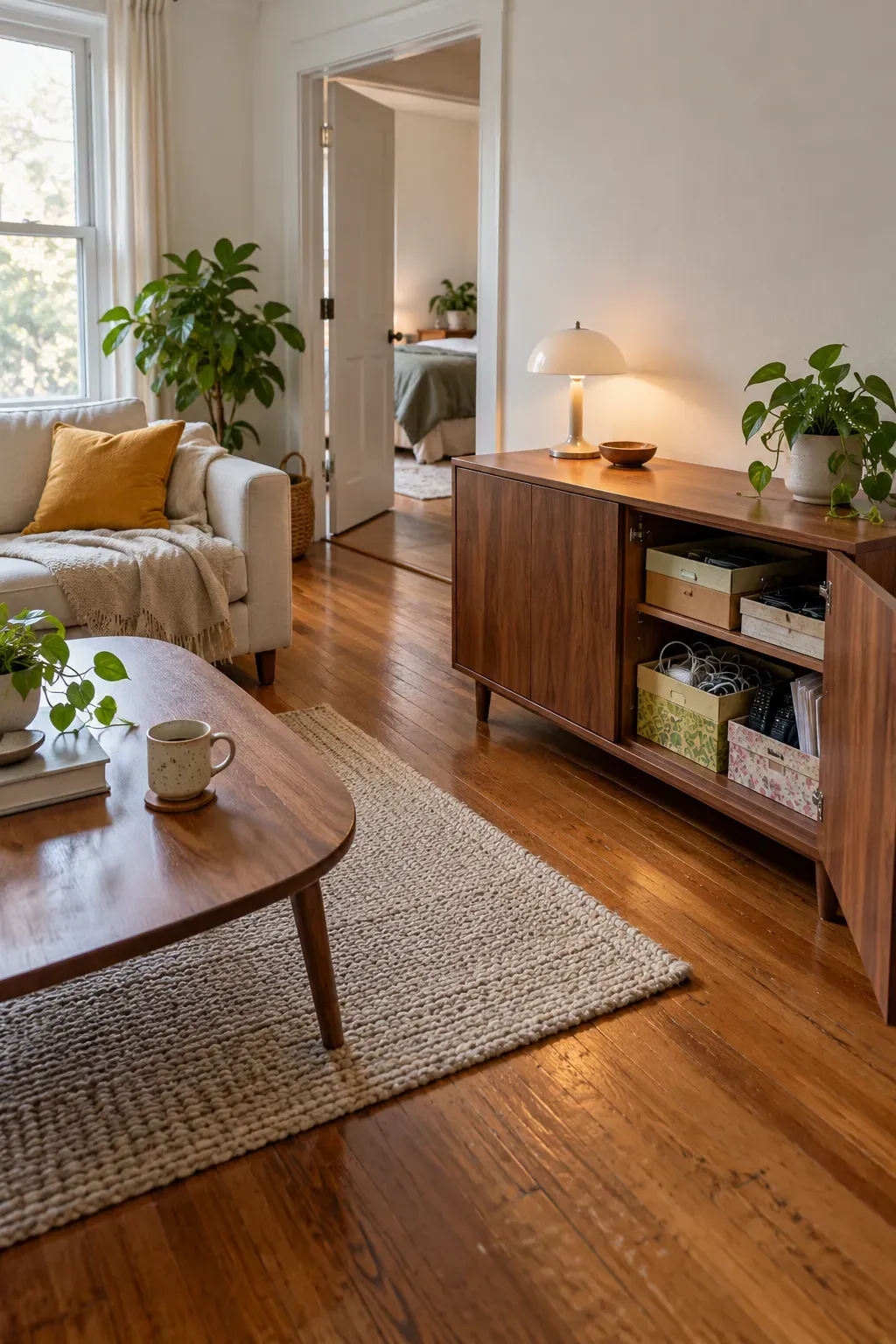
The room looks tidy until the chargers, receipts, and spare remotes return to the coffee table. That usually means those things need an easier place to land.
Empty a drawer or part of a cabinet you already own. Group the items you reach for together, then use small boxes from around the apartment to keep them apart. A sturdy gift box can hold charging cables without becoming another purchase.
Keep daily items easy to reach: If putting something away means moving several other things first, change the setup. Save the awkward back corners for items you rarely use.
Before buying another organizer
- Remove things that belong in another room.
- Measure the usable space inside the drawer or cabinet.
- Test your existing boxes with the items inside them.
- Check that the drawer closes without catching cords or lids.
- Leave room to take something out without emptying the whole section.
13. Group Coffee Table Essentials on One Small Tray
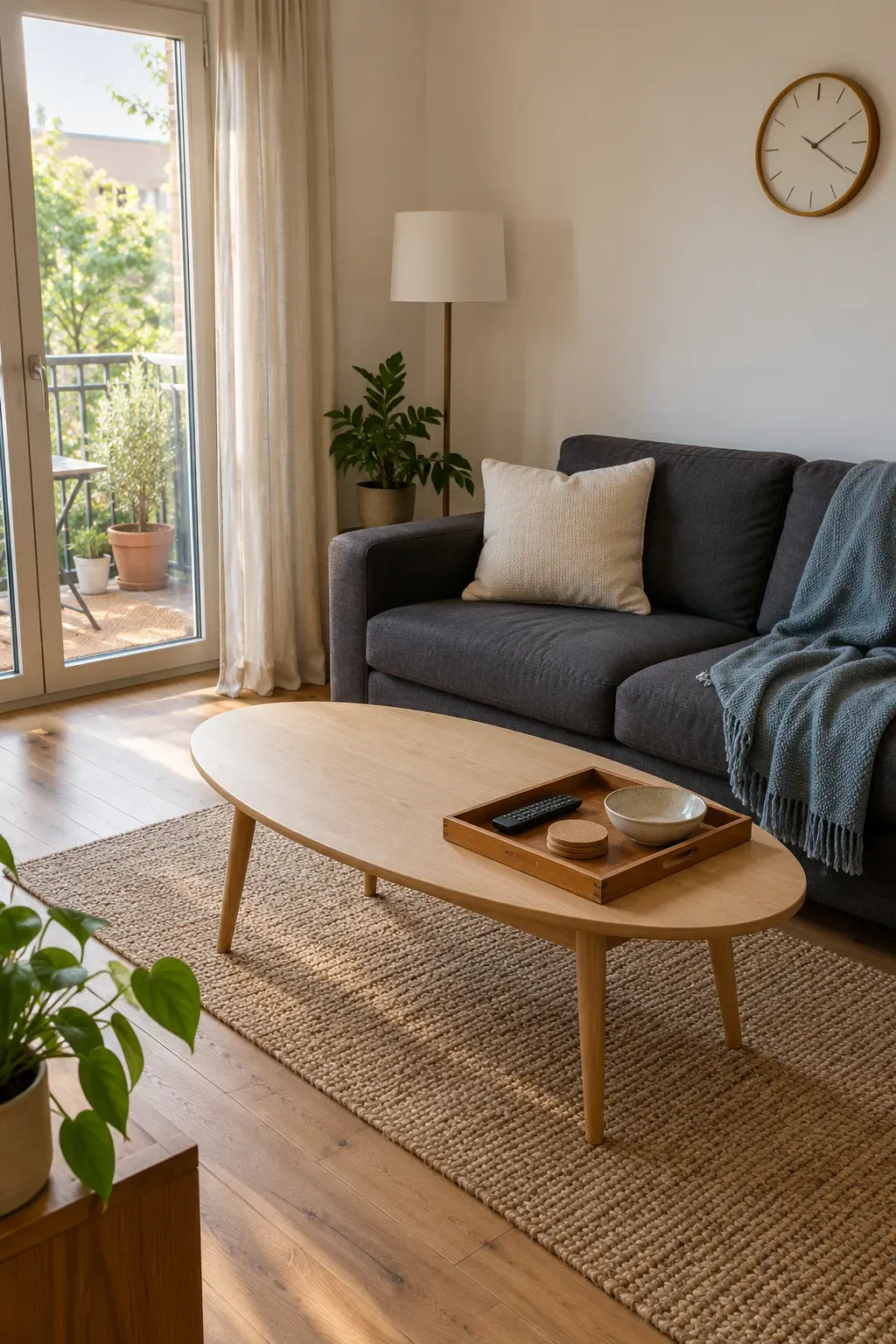
A remote, a coaster, and a little bowl can look scattered across a coffee table. Put them on a tray, and they read as one tidy group.
Use a tray you already have, or look for a plain secondhand one with a sound base. Choose a size that leaves space for drinks and whatever you actually do at the table. In a tiny living room, that might include eating dinner.
Make it easy to move: Keep the tray light enough to lift with everything on it. You should be able to clear the table without making several trips.
Inside the tray
Small things that tend to wander, such as the remote and spare coasters.
Outside the tray
An open patch of tabletop for a drink, a plate, or your current book.
Leave off
Tall decorations that block the view or get knocked when you reach across.
14. Restyle Your Bookshelf With Room Between Groups
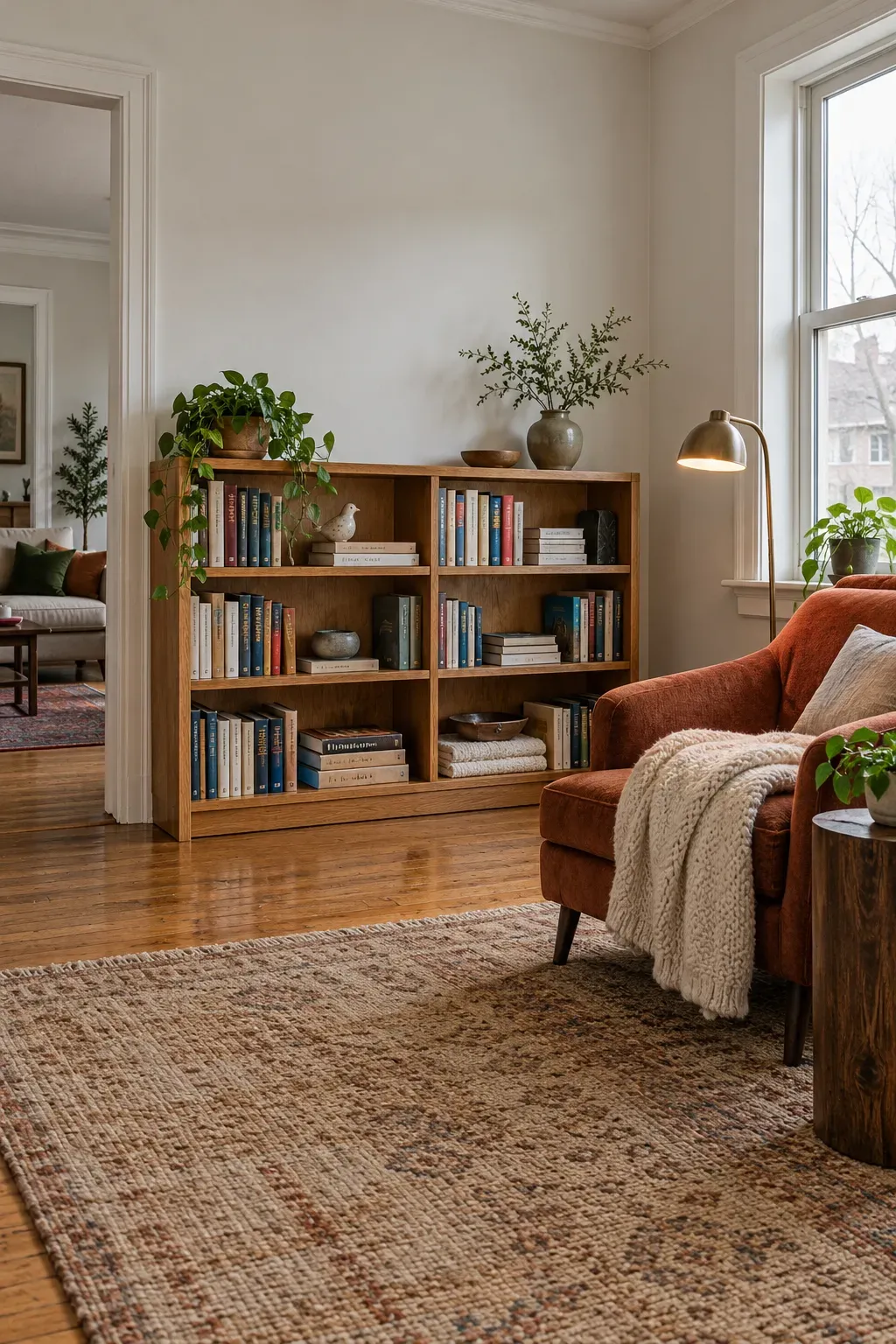
A bookshelf does not need decorations squeezed into every gap. A little open space can help your books and useful objects stand out.
Start by removing anything that belongs elsewhere. Keep most books upright, then use a short horizontal stack where it helps support the arrangement. Leave some visible shelf between groups instead of spreading small ornaments across every level.
Keep it usable: Leave titles facing out and put books you reach for within easy reach. If every shelf is needed for books, focus on straightening the rows and removing stray objects. You do not need empty shelves to make it look cared for.
Edit one shelf at a time. Set aside loose papers, empty packaging, and objects stored there by habit.
Arrange for access. Keep stacks low enough to lift easily and avoid trapping a favorite book underneath.
Step back. Move a small object if it disappears against the books rather than adding more around it.
15. Dress a Tiny Dining Table With a Fabric Runner
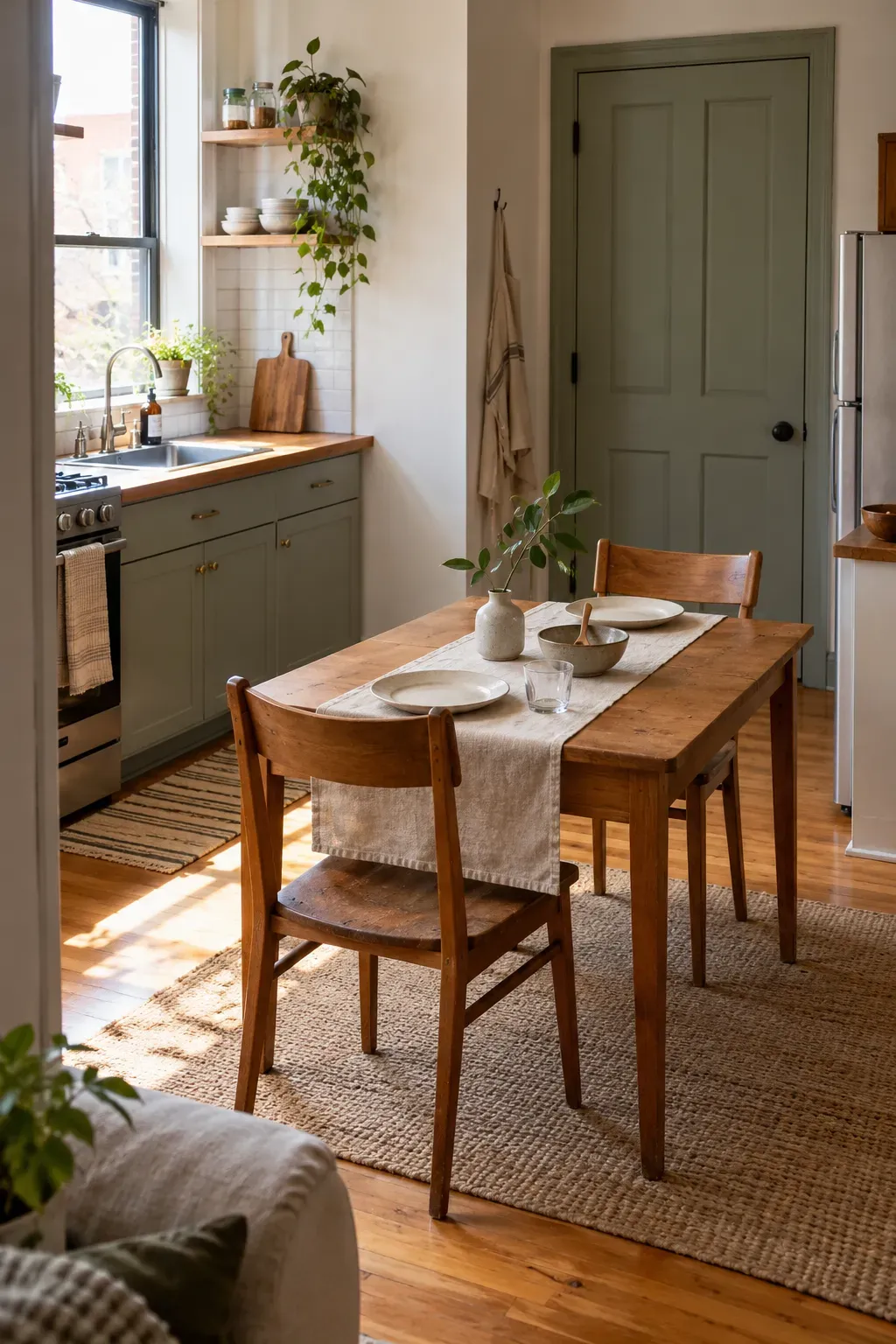
The breakfast table often doubles as a desk, a mail station, and the place you fold laundry. A simple runner can help it feel ready for a meal again without covering the whole surface.
Choose washable fabric that leaves plenty of tabletop showing on both sides. A leftover length of cotton or linen-blend fabric can work if you finish the edges neatly. Keep the color quiet enough to sit comfortably with your everyday plates.
Test it with the chairs pulled in: The ends should not bunch on someone’s lap. On a very small table, a shorter runner can sit entirely within the tabletop.
✅ Keep it practical
Check that plates and glasses sit steadily beside any raised seams.
Choose fabric you can wash after an ordinary meal.
Skip the extra fuss
Bulky knots, long tassels, or fabric that catches when a chair moves.
A large centerpiece that leaves nowhere to put the serving bowl.
16. Slip a Nursery Pot Inside a Secondhand Planter
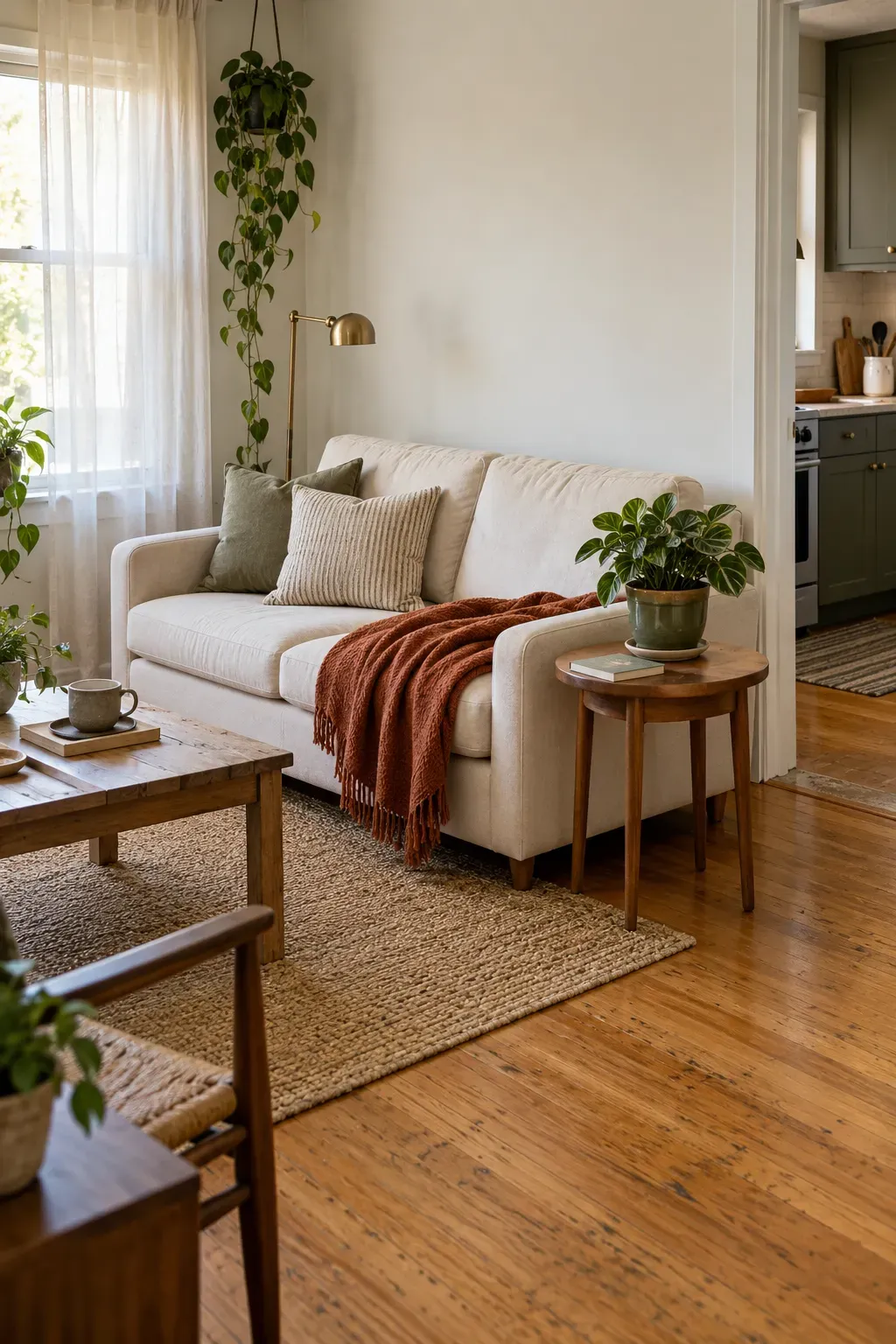
The plastic pot your plant came in can stay. A secondhand outer planter can hide it while adding a little color or texture to a windowsill, shelf, or side table.
Choose a planter with enough room to lift the nursery pot out easily. A simple glazed pot often works better in a small room than a large decorative stand that takes up floor space.
Keep watering practical: Remove the nursery pot to water it, let it drain, then return it to the outer planter. Empty any collected water so the inner pot does not sit in it. Protect the furniture underneath, too.
🌿 Check the fit before buying
Measure the nursery pot at its widest point, including the rim. Check the outer planter’s inside opening, not just its outside width. Inspect secondhand pots for cracks, and do not assume decorative pottery is watertight.
17. Make Mixed Bathroom Towels Look Intentional
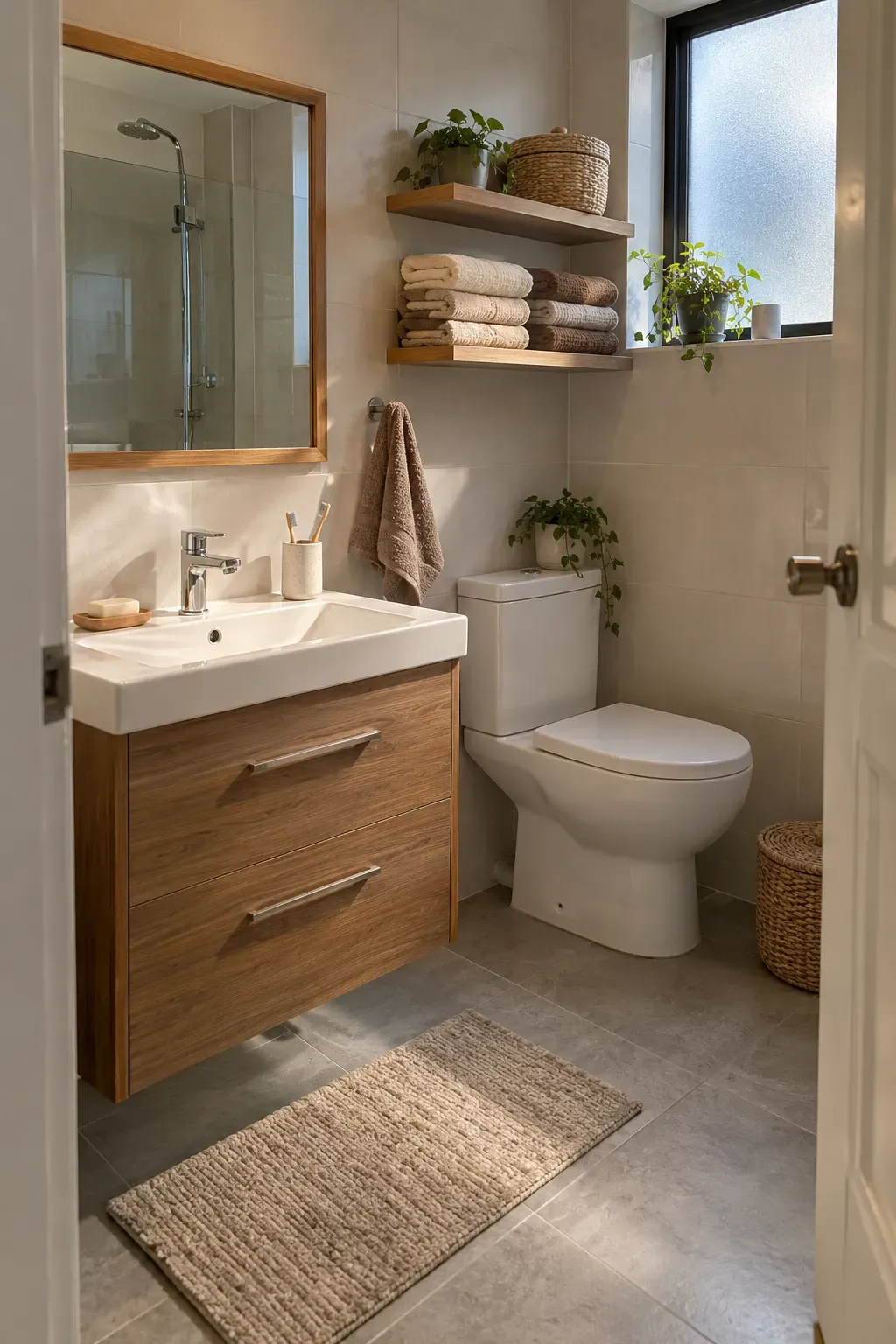
Your towels do not need to come from the same set. They look more connected when the colors work together and the folds feel consistent.
Pull out the towels you already own and group similar shades. Cream, beige, and muted brown can sit comfortably together, even with different textures. Display the ones you use, then store the extras where they stay dry.
Keep the routine easy: Fold clean spares to a similar width, but spread damp towels out to dry after use. A tidy stack looks nice on a shelf. It should not become a place to hide a towel that is still wet.
Warm neutrals
Group cream, oatmeal, and soft brown beside wood or beige finishes.
Cool neutrals
Try white, pale gray, and charcoal around cooler tile colors.
A gentle color
Repeat an existing sage or dusty blue towel without adding another competing shade.
18. Choose a Simple Shower Curtain That Fits the Space
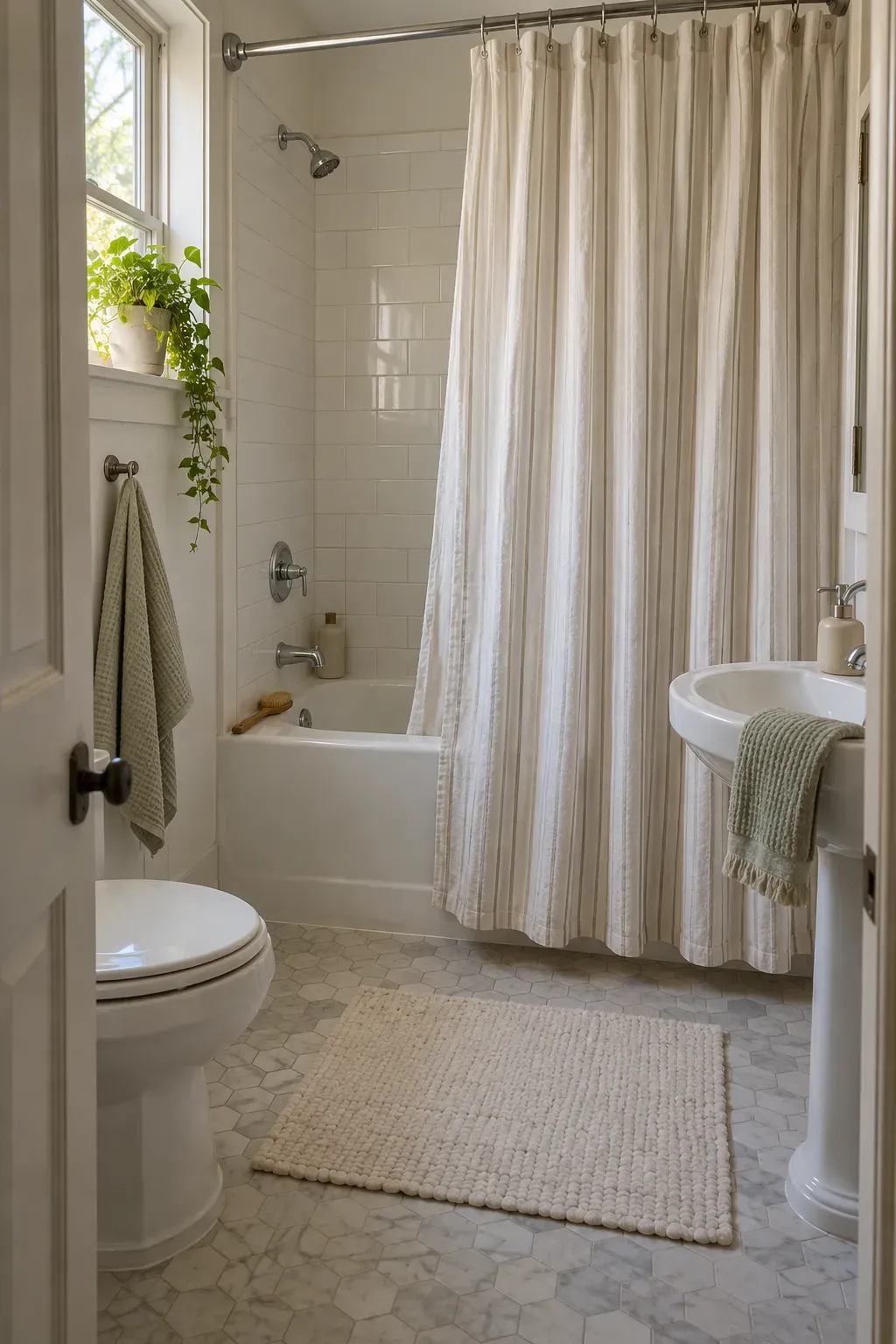
A busy shower curtain fills a lot of your view in a tiny bathroom. A plain curtain or a quiet stripe can give the room a calmer backdrop without changing the tile.
Measure the rod and the drop before shopping. Choose a washable fabric and enough width for gentle folds when closed. Check whether it needs a separate liner, and follow the product’s care directions.
Get the length right: Keep the decorative curtain off the bathroom floor. Position the liner inside the tub or shower as intended, so it helps contain water. A higher rod only works if the curtain and liner still fit properly.
Check before opening the package
- Compare the curtain’s width with the full span it needs to cover.
- Include the hooks or rings when checking the hanging length.
- Confirm whether a liner and hanging rings are included.
- Check that the cleaning instructions suit your laundry routine.
- Choose a pattern you like beside the tile you already have.
19. Refresh a Scuffed Side Table With a Painted Base
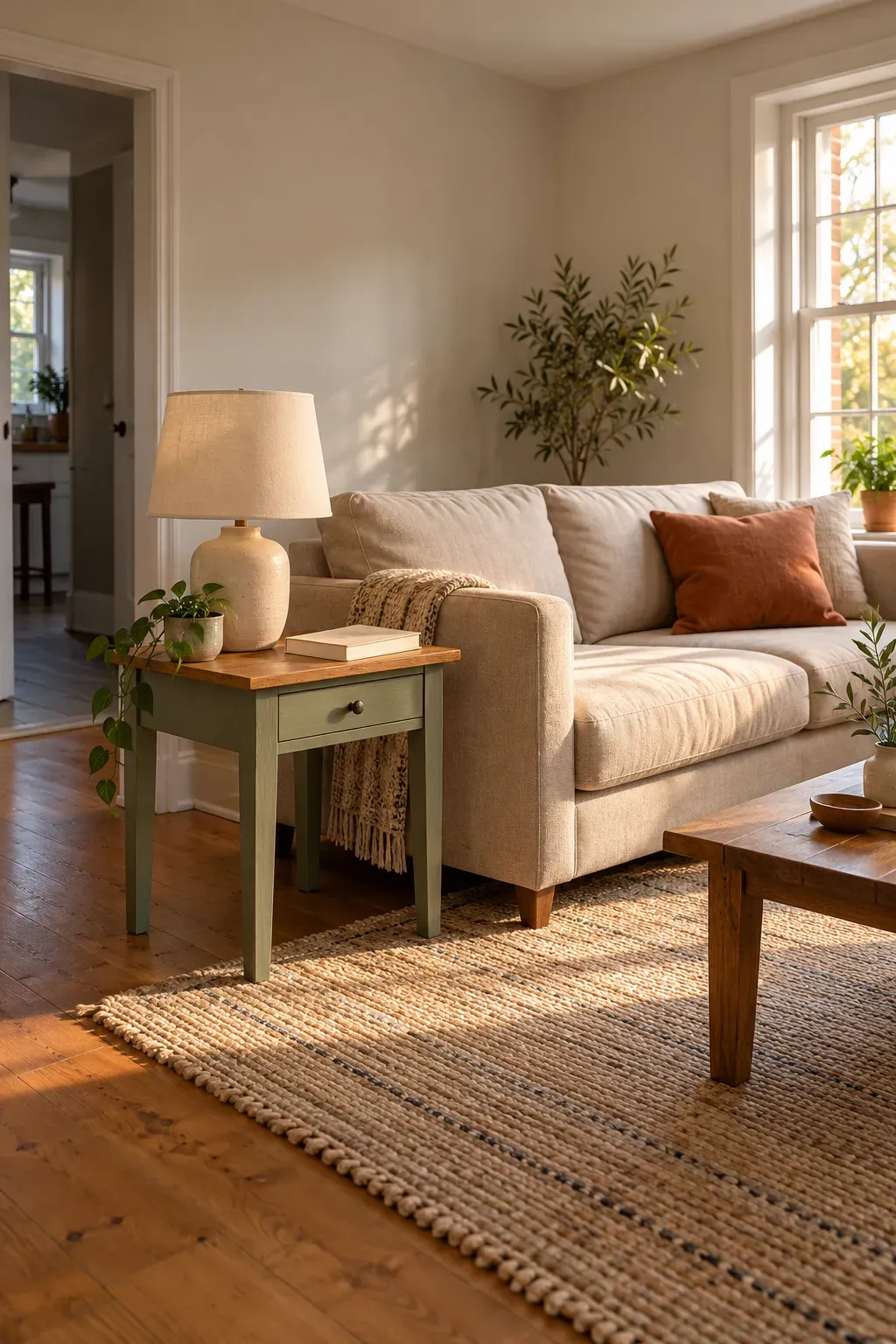
A sturdy side table can deserve another chance even when its legs look tired. Painting the base while keeping a sound wood top can give it a more finished look without replacing the whole piece.
Start with a table that sits firmly and has no loose joints. Clean it, identify the surface material, and choose a paint system suited to that surface. Follow the maker’s preparation, ventilation, and drying directions.
Try the color first: Hold a painted sample beside the sofa and floor. A warm brown, muted sage, or soft charcoal can connect the table to colors already in the room.
BEFORE
A useful table has visible scuffs on its base, but its top and structure are still in good condition.
AFTER
The refreshed base works with the room’s colors. Allow the finish to cure as directed before putting the table back into daily use.
20. Turn a Shallow Dish Into an Entryway Drop Zone
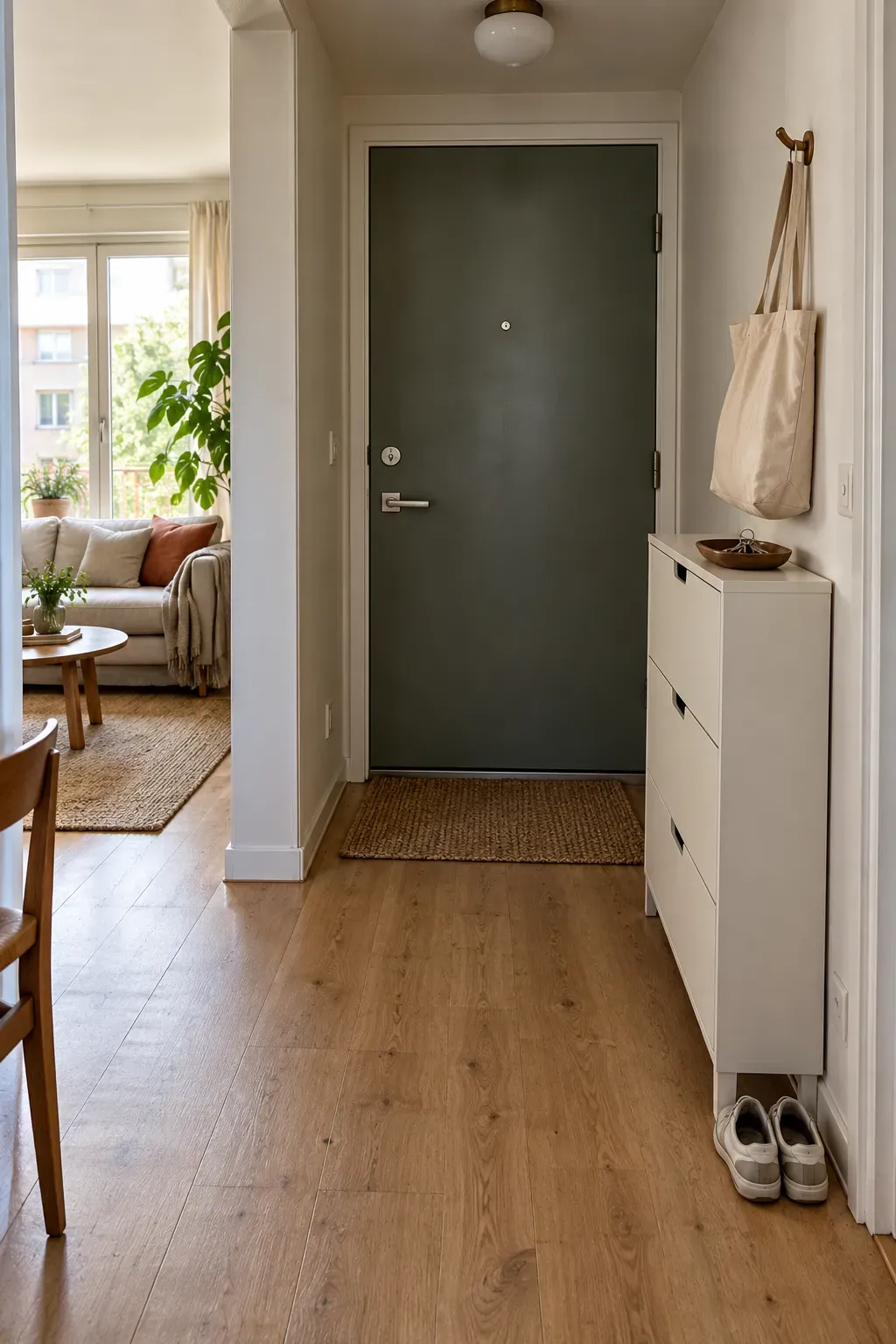
Keys are easier to find when they land in the same place every day. A shallow dish can create that spot without adding an entryway table to a narrow hall.
Set a bowl or small plate on an existing ledge, cabinet, or bookcase near the door. Choose one wide enough for your keys but small enough to keep the surface useful. A piece from your kitchen cupboard may already fit.
Give it one job: Keep it for the things you take when leaving home. Receipts, loose mail, and old batteries will quickly turn a useful landing spot into another clutter pile.
Check the door swing. Use a spot that stays clear when the door opens fully.
Protect the surface. Check the dish’s underside and add suitable felt pads if the base is rough.
Test your routine. Put your keys there when you arrive. Move the dish if reaching it feels awkward.
21. Repeat One Metal Finish Across Small Accessories
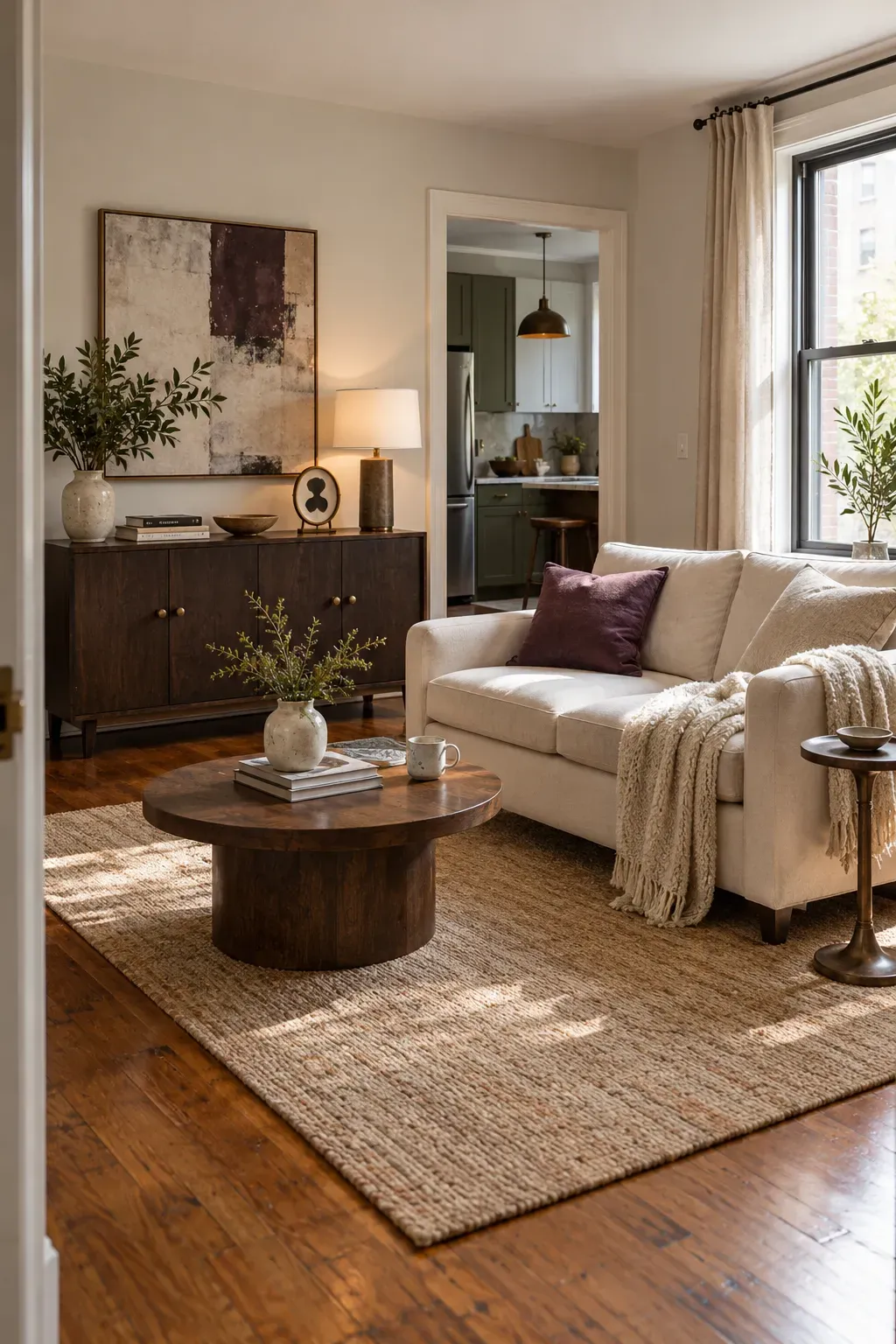
Mixed metal finishes can work together, but a small room may feel busy when every little accessory has a different shine. Repeating one finish gives the eye something familiar to follow.
Look at the pieces already in view. A dark bronze lamp base might connect with a picture frame or cabinet pulls. Bring those pieces closer to the same area before buying replacements.
Keep the useful pieces: You do not need to replace taps, door handles, or every silver object. Focus on a few visible accessories. Similar warmth and sheen can be enough, even when the finishes are not an exact match.
Start with a keeper
Use a lamp, frame, or handle you already like as the starting finish.
Compare the shine
Brushed and aged surfaces look different from highly polished metal, even in similar colors.
Spread the repeats
Let the finish appear in separate parts of the room instead of collecting every metal piece on one shelf.
22. Cover a Scratched Dining Table With a Well-Fitting Cloth
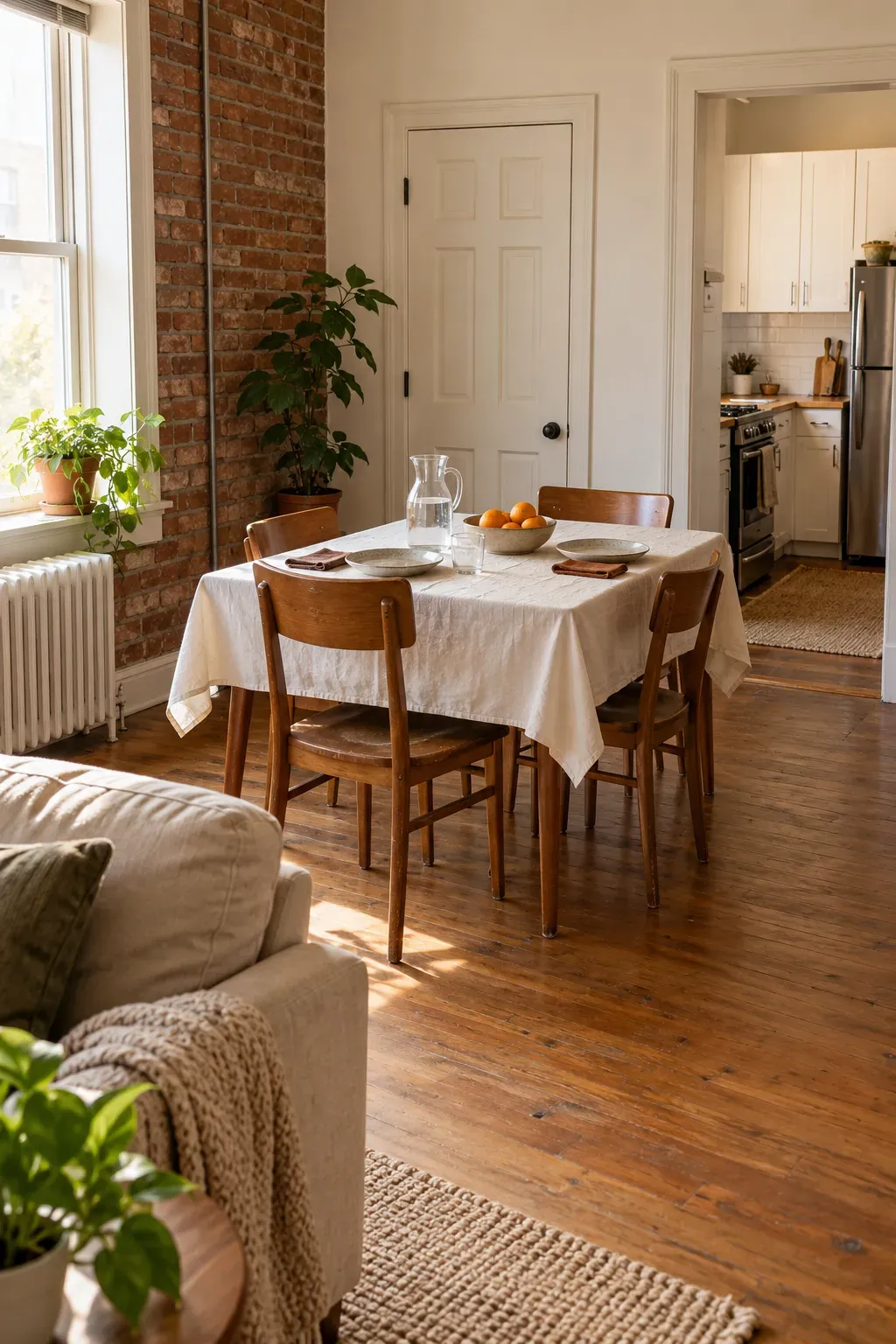
A scratched tabletop can still serve you well. When the surface looks tired but the table is sturdy, a simple cloth can hide the wear and soften the dining area.
Choose washable fabric that works with your everyday dishes. Check the drop on every side before buying or hemming it. The cloth should hang evenly without gathering on chairs or reaching the floor.
Think beyond mealtimes: If this is also your work table, choose a cloth that folds away easily. You can keep the bare surface for projects, then dress it for dinner without storing another piece of furniture.
💡 Test the drop with a sheet
Fold a clean sheet to the size you are considering. Pull out a chair, sit down, and check your lap and knees. This helps you judge the fit before spending money on fabric or a finished cloth.
23. Give a Plain Bedroom Wall a Painted Headboard Shape
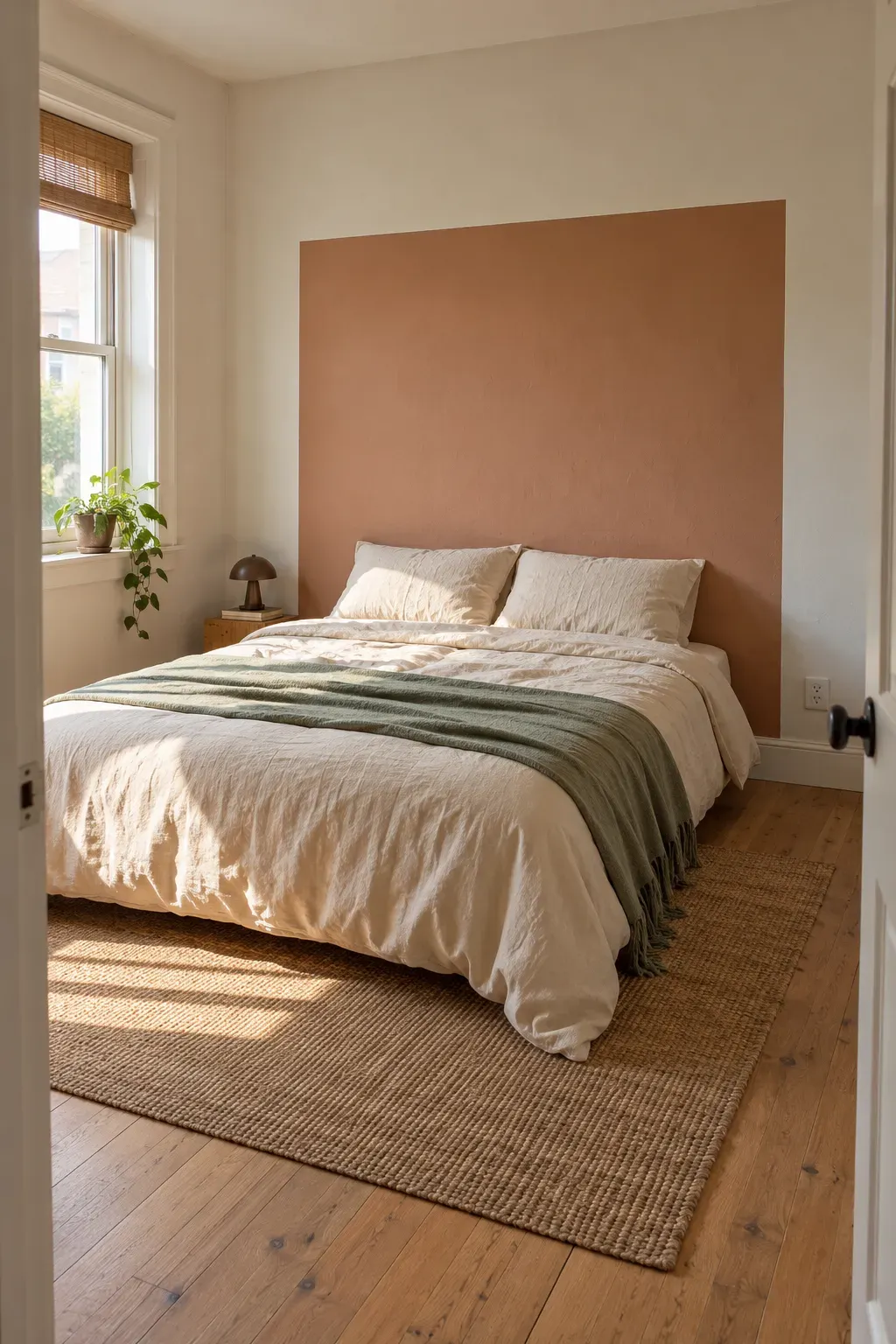
A painted shape behind the bed can create a focal point without taking up any floor space. This works best when painting is allowed and the wall is in good condition.
Choose a muted color that connects with your bedding, then sketch the shape on paper. A simple rectangle is easier to mark out than an arch and can feel just as finished. Test a paint sample before committing to the whole area.
Measure around real life: Keep sockets and switches usable, protect nearby surfaces, and follow the paint maker’s directions. In a rental, confirm permission and any repainting requirements first.
Rectangle
A straightforward choice when you want clean edges and a shape that follows the bed.
Soft arch
A curved outline takes more care to mark and paint. Check that the curve looks balanced before starting.
Paper test
Arrange paper pieces to judge the size against the bed. Use a wall-safe method and check it on a hidden spot first.
24. Move Furniture Just Enough to Clear the Main Walkway

Sometimes the room needs a small furniture shift before it needs another decoration. A chair angled into the walkway or a side table beside the door can make the whole space feel awkward.
Walk your usual route between the entrance, sofa, kitchen, and bedroom. Notice where you turn sideways, bump a corner, or move something out of the way. Adjust those pieces first, then test the route again.
Keep the room comfortable: Check the layout while carrying a laundry basket or pulling out a dining chair. The arrangement should work during an ordinary day, not just when everything is tucked away.
Walk through before calling it finished
- Open doors, cupboards, and drawers fully.
- Pull dining chairs out as you would when sitting down.
- Check that furniture does not block vents or exits.
- Keep cords out of the newly cleared walking route.
- Make sure the people who use the room can move through comfortably.
25. Leave One Surface Mostly Bare for a Calmer Finish
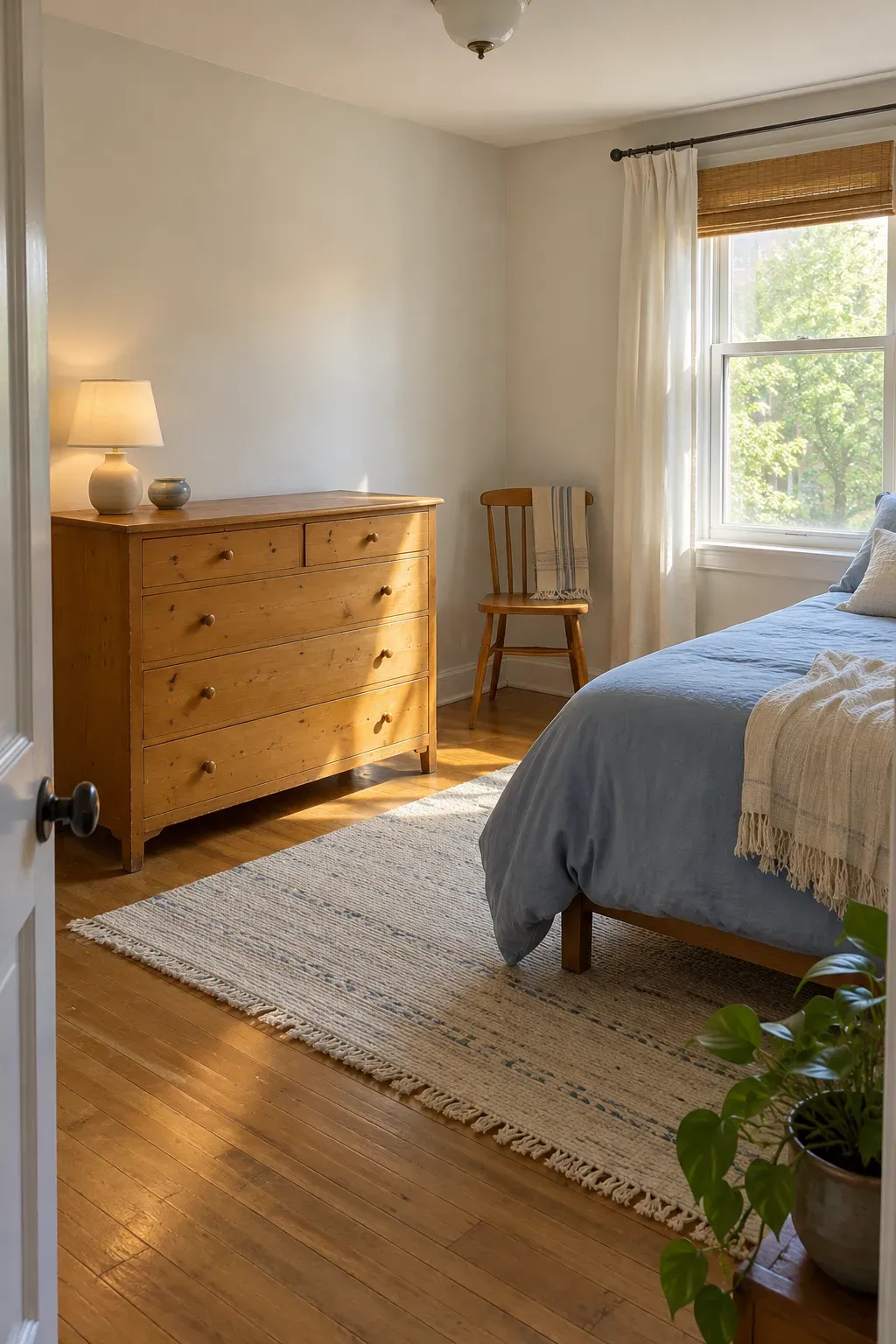
An empty patch of furniture can be part of the decorating. It gives the eye a place to rest and leaves room for the things you use.
Choose one surface that always feels crowded, such as a dresser top or the end of a media cabinet. Remove everything, wipe it down, then return only what earns its place. A useful lamp and one personal object may be enough.
Give removed pieces a proper home: Put useful items away and set unwanted ones aside to donate or sell. Moving the same clutter onto the next shelf will only shift the problem around.
BEFORE
A dresser holds loose receipts, spare products, small ornaments, and things waiting to be put away.
AFTER
The everyday items have homes. A lamp and a personal keepsake remain, with enough clear space to set something down.
You do not need to tackle every corner at once. Choose the change that would make your apartment easier to enjoy today, whether that means fixing a curtain hem or clearing the path to the sofa. Live with it for a few days before deciding what comes next.
Cheap apartment decor that looks expensive often comes down to fit, useful details, and knowing when to stop adding things. Keep what works, reuse what you can, and leave room for everyday life.
Save this list to Pinterest for the next time you want to refresh your apartment without filling it with more furniture.